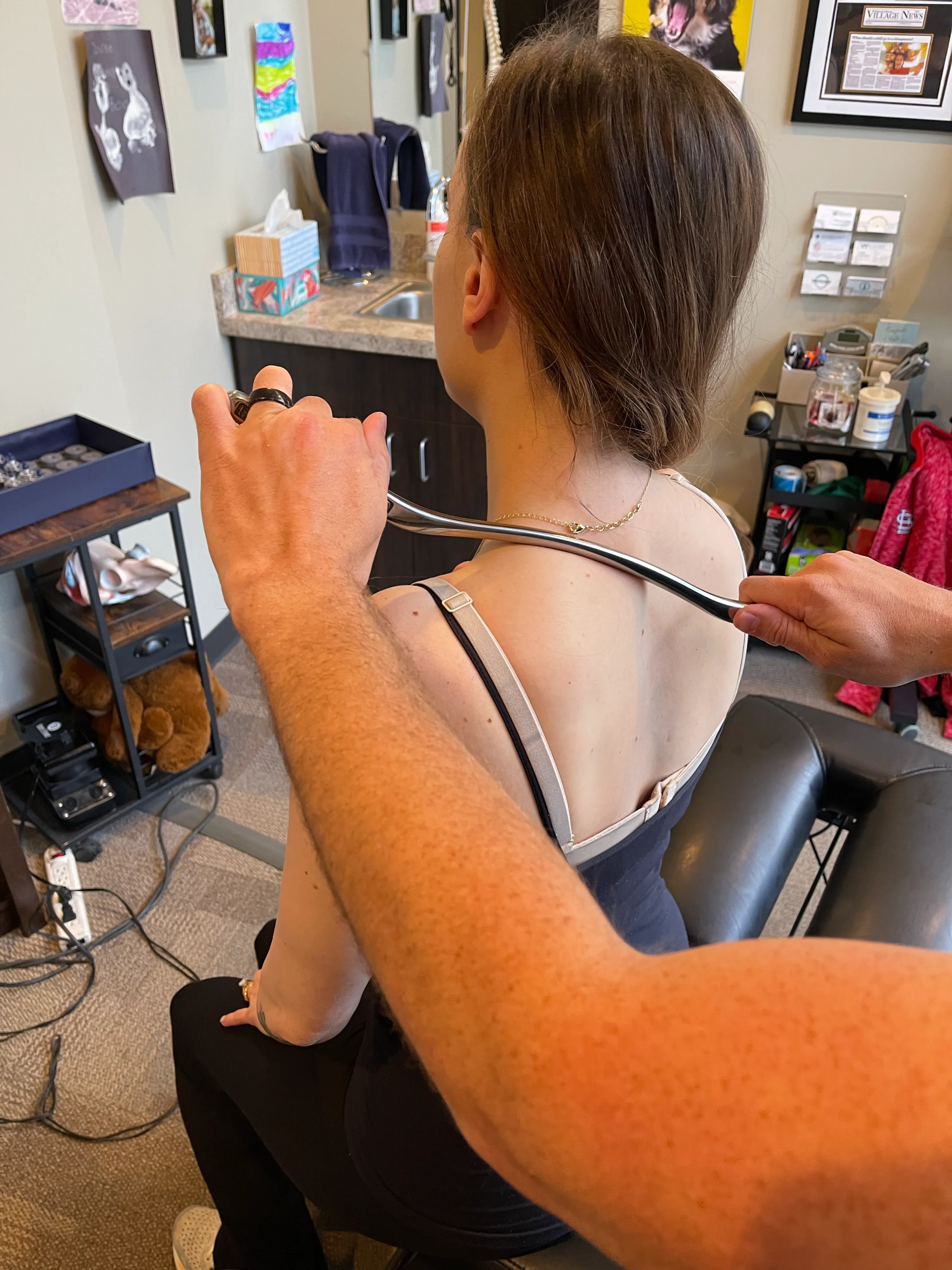
How Can Graston and Dry Needling Help With Scar Tissue?
Scar tissue is a normal part of the healing process after surgery or injury. While scars are often thought of as purely cosmetic, many people experience much more than just a visible mark. Scar tissue can create tightness, pulling sensations, numbness, pain, and restricted movement that can last for years after an injury or surgery.
At our office, we frequently work with patients who have scar tissue from surgeries, C-sections, muscle injuries, plantar fasciitis, tennis elbow, and other conditions. Many of these patients have been told that their symptoms are simply something they’ll have to live with. Fortunately, that isn’t always the case.
Two of our favorite tools for addressing scar tissue are Graston Technique and dry needling.
What Is Scar Tissue?
Scar tissue forms when the body repairs damaged tissue after surgery, injury, or trauma. While scar tissue serves an important purpose, it doesn’t always heal in the same organized pattern as the original tissue.
Over time, scar tissue can become thick, restricted, and less mobile than the surrounding tissues. This can create tension that affects nearby muscles, joints, nerves, and movement patterns.
Patients commonly describe symptoms such as:
- Tightness around a scar
- Pulling sensations with movement
- Pain around the scar site
- Numbness or altered sensation
- Decreased flexibility or mobility
- Sensitivity to pressure around the scar
How We Evaluate Scar Tissue
When evaluating a patient, we’re looking for more than just the appearance of the scar.
Some of the things we commonly assess include:
- Tenderness around the scar
- Thickened tissue beneath the skin
- Areas that feel “gritty” or restricted
- Limited mobility of the skin and underlying tissue
- Pain during movement
- Areas of numbness or altered sensation
These findings help us determine whether Graston, dry needling, or a combination of both may be beneficial.
How Graston Helps Scar Tissue
Graston Technique is a form of instrument-assisted soft tissue mobilization that uses specialized stainless steel tools to identify and treat areas of tissue restriction.
In our experience, Graston can help:
- Break apart adhesions and scar tissue
- Improve tissue mobility
- Increase blood flow to the area
- Encourage tissue remodeling
- Decrease tension and pulling sensations
- Improve movement and function
Many patients are surprised to learn that scar tissue restrictions can extend beyond the visible scar itself. By treating the surrounding tissue, we can often improve mobility and comfort in the affected area.
Although Graston can be uncomfortable at times, most patients report feeling looser and moving better immediately after treatment.
How Dry Needling Helps Scar Tissue
Dry needling uses very thin needles to target restricted tissue and muscular dysfunction around scar tissue.
Unlike acupuncture, dry needling is based on modern anatomy and movement science. The goal is to improve tissue quality, reduce restriction, and promote healing.
Dry needling may help:
- Improve blood flow
- Stimulate healing responses
- Reduce muscle guarding around the scar
- Improve mobility
- Decrease pain and tension
- Restore normal tissue function
One of the biggest misconceptions about dry needling is that it’s painful. In reality, many patients barely feel the needle go in. While some soreness afterward is possible, it is usually mild and short-lived.
Should You Choose Graston or Dry Needling?
The answer depends on the patient.
In our office, we often recommend trying both techniques to see which produces the best response. Some patients respond exceptionally well to Graston, while others notice greater improvement with dry needling.
Treatment is always individualized based on the patient’s condition, symptoms, and goals.
Real Patient Success Stories
Improved Sensation Years After a C-Section
One patient came to our office years after having a C-section. She had never regained normal feeling around the scar and believed the numbness was permanent.
After several treatments, she noticed significantly improved sensation around the scar. While some areas remained slightly dulled, she regained much more feeling than she thought was possible years after surgery.
Avoiding Additional Corrective Surgery
Another patient had a scar near her eye after having skin cancer removed. Her surgeon had informed her that she would likely need an additional corrective procedure.
After undergoing Graston treatment on the scar tissue, the mobility and appearance of the tissue improved enough that she no longer required the corrective surgery.
While every patient responds differently, these cases highlight the body’s remarkable ability to continue adapting and healing long after the initial injury or surgery.
What to Expect During Treatment
Treatment typically begins with a thorough examination of the scar and surrounding tissues.
Depending on the findings, treatment may include:
- Graston Technique
- Dry needling
- Chiropractic adjustments
- Mobility exercises
- Scar tissue mobilization techniques
- Home rehabilitation exercises
A visit that includes Graston and adjustments typically takes about 15 minutes. Visits that include dry needling and adjustments generally take 20-30 minutes.
Because we only see patients for a short period each week, we often provide home exercises and mobilization techniques to help speed up progress between visits.
Does Scar Tissue Treatment Hurt?
This is one of the most common questions we receive.
Graston can sometimes be uncomfortable, particularly in areas with significant restriction. However, patients often notice immediate improvements in mobility and tension afterward.
Dry needling is usually much less painful than people expect. Many patients are surprised by how little they feel during treatment.
Some soreness afterward is normal with either treatment, but it is typically short-lived.
We also recommend drinking plenty of water after treatment.
When Do Patients Get the Best Results?
The patients who achieve the best outcomes are typically those who:
- Commit to multiple treatments
- Perform their home exercises and mobilization techniques
- Address issues early when possible
- Remain consistent with care
Newer scars are often easier to treat because compensations and additional scar tissue restrictions have not had as much time to develop.
However, that doesn’t mean older scars cannot improve.
Is It Ever Too Late to Treat Scar Tissue?
Absolutely not.
One of the biggest myths we hear is that if a scar is several years old, nothing can be done about it.
In our experience, older scars can still respond very well to treatment. They may require more time and consistency due to years of compensation and additional tissue buildup, but improvement is often possible.
If you’ve been living with tightness, pulling, numbness, pain, or movement restrictions around a scar, it may be worth having it evaluated.
Just because a scar is old doesn’t mean it’s beyond help.
Frequently Asked Questions
Can Graston break up scar tissue?
In our experience, Graston can help break apart adhesions and scar tissue restrictions while promoting tissue remodeling and improved mobility.
Can dry needling help scar tissue?
Yes. Dry needling can help improve blood flow, stimulate healing, reduce tension, and improve the quality and mobility of tissue around scars.
Is Graston painful?
Graston can be uncomfortable in restricted areas, but most patients tolerate it well and often feel improvement immediately afterward.
Is dry needling painful?
Most patients are surprised by how comfortable dry needling is. Many barely feel the needle enter the skin.
Can scar tissue cause numbness?
Yes. Scar tissue can contribute to numbness, altered sensation, tightness, and discomfort around the affected area.
How soon after surgery can scar tissue treatment begin?
We typically recommend waiting several weeks after surgery to allow the incision to heal. We do not treat scars that are still open or actively healing.
Can old scar tissue still be treated?
Yes. Even scars that are several years old can often improve with the appropriate treatment plan.
Who should not receive dry needling?
We do not perform dry needling on pregnant patients, individuals taking blood thinners, or patients who are immunocompromised.
Can scar tissue treatment improve the appearance of a scar?
In many cases, improving tissue mobility and reducing restrictions can help improve the appearance of a scar in addition to improving function and comfort.
How many treatments will I need?
Every patient is different. Most patients experience the best results when they commit to multiple treatments and follow through with home care recommendations.